Showing posts with label composting. Show all posts

23 September 2011

23 September 2011

We have had a busy week in our garden again this week. Spring break for Sandra, means she has wanted to get a few things done, both indoors and outdoors while she has some time off from attending classes. She has tidied her study and now it puts mine to shame! *blush*
In the garden, Sandra dug a new garden bed, but sadly, the place where it is located has very poor soil, so that has been a bit of a wasted effort. I don't know if we will just let it grow over with grass again, or try and build up the soil. We used the chickens to help with the work of digging, by setting up a temporary tractor for them using garden stakes and some netting we bought cheap from the reject shop. We draped an old piece of shadecloth over it. The end result was makeshift, but was sufficient just to keep them pnned there for the day while they scratched over the ground.
Maybe the lack of digging and scratching by the hens should have alerted us that this soil was pretty lacklustre. Oh well, live and learn.
So, now we need to find an alternate location to plant some more veges and try to build up this area's soil as our ultimate aim is to have the vege garden close to the house so that it is easy to get fresh produce for the kitchen.
Sandra also created a compost bin from one of the plastic garbage cans we bought from Bunnings with the gift vouchers I received for my birthday in August. She cut the bottom out of the bin so we could then turn it upside down to use as a compost bin. and the lid now sits nicely on the 'top' (what used to be the bottom) of the inverted bin. There are some grass clippings in here already and next time the Bokashi is full, I will put the contents into this bin with some soil so that it can break down into compost.
Snapbucket
The chair standing behind the compost bin is to protect newly planted choko vines which we have put in here to train them over the chicken coops for shade for the hens in summer.
Of course, this compost bin may end up being a smelly, slimy failure so we have a backup plan in case that happens.
Snapbucket
This is your common, garden variety compost heap just grass clippings at the moment, but I will soon be adding deep litter from our chicken coops to this as I am about to clean out the roost and run and replace the litter with fresh litter for the warmer months. I use a deep litter system as it only requires cleaning about twice yearly. In between clean outs I just add new litter on the top whenever the pens start to get a bit smelly. The chickens keep it turned over with their scratching around in the run. They can be encouraged to scratch more by tossing some grain down on the floor once a week.
On Wednesday afternoon, a courier delivered a dozen fertile eggs which I had ordered for our broody hen, Bertha. I had been anxiously awaiting their arrival and keeping close to the house whilst Sandra worked on compost bins, heaps, and garden beds. We eagerly opened to package to find that, sadly, two of the eggs got broken in transit. They were quite crushed, but the other ten were in good condition. We placed them in the bathroom on the counter to rest for twenty-four hours before putting them under our hen.
I put the fertile eggs under her about 6:30 last night. She is such a patient hen and didn't fuss about me slipping 10 eggs under her. She just soflty clucked: "buk-book-buk buk-book-buk?" as though gently welcoming each new egg. She's such a good chookie, I really hope these eggs hatch for her.
Snapbucket

17 September 2011

Bokashi, Books and Broody hens

 It was time to bury another bucket full of Bokashi today so I took it up to where I buried the last lot on August 29, almost a month ago! My how time flies! I was curious to know how well the last lot I buried had broken down and I remembered saying on my blog that I would let you all know how it went. If you recall I said in THIS POST That I gathered up windfall citrus to bury with the bucket full of citrus peels, vege scraps, eggshells, and other waste from the kitchen mixed with Effective Microoganisms to help it break down. 

I started to dig where I had buried the last lot and was very surprised at how soft the ground here was. I turned over a spadeful of the most delicious smelling compost! It's kind of fruity and sweet smelling and very moist.

 For the most part, the scraps and peels had broken down completely, although there were still some little bits of citrus mixed through.

Citrus in the compost
I think that the bits of citrus that had not broken down yet might actually be from the whole ones I put in that I picked up around the yard. Anything that had been cut into small pieces and processed in the bucket prior to burying was gone!
I am really very pleased with this.
The vege patch continues to thrive, despite the potting mix we planted it in being quite hydrophobic and not holding moisture very well.
We have Roma Tomatoes coming on nicely!

 We actually put some soil on some of the veges, from the bokashi compost pit, to see if it helps at all with moisture retention. We won't be doing the 'no dig' gardening method again, though. It hasn't really saved us any work because of the time involved in trying to keep the roots moist.

I am reading a good book at the moment called Frugavore: How to grow your own, buy local, waste nothing, and eat well by Arabella Forge. I'm really enjoying it and will post a review once I have finished it. Sandra is reading Changing Habits, Changing Lives by Cindy O'Meara and I want to read that after she is done with it.
Broody Update: Bertha sat all day again, today. I think she may have been up for some food and water early in the morning, but hadn't stirred again all day. It was a very warm day and I was concerned about her, so I went and tried to put some water on her beak to tempt her to drink from a little bowl I had with me, she told me where to get off! :lol: I left her alone after that, but when I took a wet mash up for the other girls this afternoon, I offered some to her in her own little bowl and she ate about 1/4 cupful. That is food and water mixed together with some egg added so I am content that she won't starve or dehydrate. I've left a small bowl of water and a little bit of mash next to her nest for her as well. She must think this is the life. No egg laying, a comfy secure box all to herself and room service laid on! :rofl:

09 September 2011

Making EM Culture!

The past few weeks, I have been conducting highly classified, secret business! I didn't say anything about it until now, because this was the first time I had tried this recipe and I didn't want to embarrass myself if I created a horrendous zombiefied lactobacilli based monster and unleashed horror upon the world.

Yes, I was trying to culture lactobacillus, amongst other organisms for my bokashi bucket. Being on a pension, I try to do everything as frugally as I can, and am slowly teaching myself never to buy what I can make for myself, so, following THIS RECIPE I decided to try and make my own EM (Effective Microorganism) innoculant for bokashi composting. I was a bit worried that all I would end up with, would be a sour, stinking mess, but nothing ventured, nothing gained.

A couple of weeks ago, when we were going to eat rice for dinner, I washed my rice and reserved the water, setting it in a large jar in a dark cupboard for 7 days.

It came out, looking something like this


So, first part, successful! Now I had to add 10 parts milk, to 1 part rice water. I measured out 100ml of the water, to which I added 1 litre of milk, and back into the cupboard it went for another week.

That part came out looking like this:

Snapbucket,Sunshine coast


Not the most appealing looking stuff!

I admit, I expected this to smell revolting, even though the recipe said that it should just smell like yoghurt, and I was surprised when I took the lid off, to discover it did actually smell just like, well, yoghurt! So that was looking good! I then strained out the solids from the liquid and put the liquid into another bottle which I added half a teaspoon full of molasses to.


There was a little fluid left over after filling the new bottle, so I poured that onto some potted plants as it is meant to be good for the soil.

Snapbucket,Sunshine coast

It looks a lot nicer in this, final state, and it should keep for about 6-12 months under refrigeration. It smelled sweet because of the molasses and if it ever smells sour, it will mean that it has gone rancid and should be discarded.

Oh, as for the milk curds?

Sunshine coast,Snapbucket


The chooks got to enjoy those!

Poor Bertha, she still doesn't understand about food and fences!

29 August 2011

Banksias, Bokashi and Birds

I had a very busy day in the yard, today. Actually, because I have limited abilities, I had a very busy couple of hours, that felt like a whole day. LOL.

It started out with the Bokashi Bucket springing a leak on the kitchen counter, which meant that I had to deal with the contents of the bucket in order to fix the leak, so I decided that since it was pretty nearly full anyway, I would bury the contents in the backyard, in the place where we intend to put our composting bins when we set them up. So out I went with a spade and a hoe to dig a suitable trench for the bokashi.

Since I was digging anyway, I also decided that I would gather up windfallen citrus and bury them along with the bokashi compost so that the EM (Effective Microorganisms) from the Bokashi would help to break them down underground. So I grabbed a bucket and went around the yard, collecting up all the fallen cumquats, mandarins and oranges. I also pulled a few spoiled lemons from the lemon tree. (our orchard produces far more than two people can eat!).

The chooks came over to see what I was up to, "Wha-wha-what?" they cooed to me as they pecked at the ground under the trees where I had picked up the fruit. They found some tasty grubs in the still damp earth and were well satisfied, wandering away again once they'd eaten them.

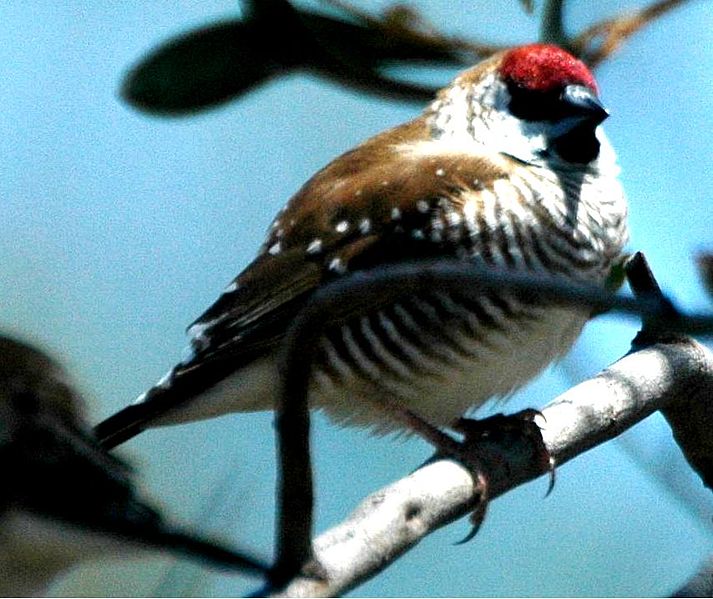
I paused for a while, standing near the plum trees and watching soft white petals drift like snowflakes on the playful breeze.  A pair of kookaburra's chortled and guffawed in the Eucalyptus tree at the end of the yard. In the branches of the plum trees, a plum headed finch dodged his own shadow and flirted with me and my camera as he sipped nectar from the blossoms. The air was filled with the heady scent of jasmine, hinting at the warm spring and summer to come.

Image from Wikipedia.com


But dawdling under the plum tree was not getting my work done, so I carted my bucket of citrus over to the composting area and started to dig a trench.

The earth was soft, rich, alive, and smelled delicious, like rich chocolate in the warm, springlike sunshine. I started to perspire as I worked and the thought of sweet, ripe mandarins on the tree was tempting me to stop for a break.

I kept at it though and finally had a trench spade deep, ready to put the fruit and the Bokashi into. It only took a few moments to bury the fruit and I went to pick one of those tempting Mandarins, carrying it down the patio to eat. It was every bit as delicious as I'd anticipated and did a lot to quench the thirst I'd worked up.

 After a little while, Sandra came outside, taking a break from her studies and we decided to dig out a dead banksia tree from in front of the aviary. This is a job that has been on the list for a while, and why not get it done while the tools for the job were already out of the shed?

It took a while, but we eventually broke off the stubborn roots and got the old, dead tree up out of the ground.

It was time for a well deserved lunch and an afternoon spent on the patio with a glass of chilled apple juice and a good book.


09 August 2011

Let the Composting Begin!

Today I finally made a trip to Bunnings in order to spend the gift voucher I received from Hannah for my birthday. I also had some cash that was given to me by my partner's mum so I had a fairly generous budget to spend.

I've been wanting to get into composting for a while now, and made a half-hearted beginning on a compost 'heap' in the backyard, which has really become more of a supplemental feeding station for the chooks, who delight to rip through it every day and pick out bits of it to eat. I don't mind them doing that, so much because they're turning it over at the same time, but the problem is that I don't then, have much other than straw and chicken poop for my compost and it's just not working!

So today with money and gift voucher in hand, I cruised the aisles at Bunnings and looked for a solution.

I'm actually quite surprised at what the budget stretched to!

I purchased an indoor (Bokashi) composter and two 60ltr plastic garbage cans which I will convert to use as outdoor compost bins, thus keeping the compost in and the chooks out. I also got a lovely new garden fork and a 15m hose which will be used to extend the current hose which is too short to reach up to the chicken coops and the potato beds that we have dug behind the chicken coops.

I'm very pleased with all this, and can't wait to get started on creating compost. In fact, the bokashi compost bucket has already been started as I type!

Below is some information about Bokashi composting for those who might not have heard of it before.

Wikipedia:

Bokashi composting

Bokashi is a method of intensive composting. It can use an aerobic or anaerobic inoculation to produce the compost. Once a starter culture is made, it can be used to extend the culture indefinitely, like yoghurt culture. Since the popular introduction of effective microorganisms (EM), Bokashi is commonly made with only molasses, water, EM, and wheat bran.

In home composting applications, kitchen waste is placed into a container which can be sealed with an air tight lid. These scraps are then inoculated with a Bokashi EM mix. This usually takes the form of a carrier, such as rice hulls, wheat bran or saw dust, that has been inoculated with composting micro-organisms. The EM are natural lactic acid bacteria, yeast, and phototrophic bacteria that act as a microbe community within the kitchen scraps, fermenting and accelerating breakdown of the organic matter. The user would place alternating layers of food scraps and Bokashi mix until the container is full. Liquid "compost tea" is drained once or twice a week and can be diluted 1:100 and added to plants as fertilizer, or poured directly down drains to help clean them.[17] Once the container is full, it is left to ferment for an additional 2 weeks in the container, and then buried under 6-8 inches of soil, in ground or in a non-reactive container. After another two weeks buried under soil, the food scraps should be broken down into rich compost.

Inside a recently started Bokashi bin. The aerated base is just visible through the food scraps and Bokashi bran.

http://en.wikipedia.org/wiki/Bokashi_composting#Bokashi_composting